
H-1B Visa Fee Hike: Impact on Indian IT and Global Workforce
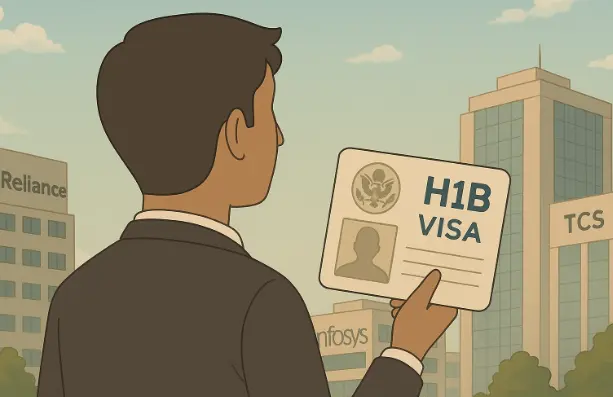
The United States has announced a major change in its immigration policy by introducing a $100,000 fee on new H-1B visa applications.
Signed into effect by former U.S. President Donald Trump on September 19, 2025, the order requires employers to pay the hefty sum for each new H-1B petition filed after September 21. While the new regulation does not affect existing visa holders or renewals, it significantly alters the cost dynamics for companies looking to hire foreign talent, especially from India, which remains the largest beneficiary of H-1B visas.
The move has already sparked strong reactions in India and across the global technology industry. Indian IT giants like TCS, Infosys, Wipro, and others rely heavily on H-1B visas to place skilled professionals in U.S. projects. With the fee set at $100,000 per petition, many firms are expected to scale back on onshore hiring and focus more on offshore delivery models. The Indian government has also raised concerns that such steep fees could disrupt families and limit opportunities for talented professionals seeking careers in the United States.
Economists and analysts are also weighing in on the broader economic implications. According to JPMorgan estimates, the new fee could lead to a reduction of nearly 5,500 work authorizations per month, which in turn may impact U.S. companies that rely on skilled immigrant labor to fill gaps in their workforce. Legal experts are questioning the legality of imposing such a fee without Congressional approval, and debates continue around whether the policy will truly benefit American workers or simply reduce the global competitiveness of U.S. firms.
Conclusion
The $100,000 H-1B visa fee represents one of the most dramatic changes to U.S. immigration policy in recent years. While it may be aimed at protecting domestic jobs and encouraging higher wages, the policy risks straining U.S.–India relations, disrupting IT business models, and reducing America’s access to global talent. For now, companies, employees, and policymakers on both sides are closely watching how this decision reshapes the future of skilled migration and the technology sector.